Asiņošanas novērtējums
Laipni aicinām izmantot mūsu asiņošanas novērtēšanas rīku
Ne vienmēr ir viegli noteikt, vai asiņošana ir pārāk stipra. Šis tests ir izstrādāts, lai palīdzētu jums un jūsu ārstam noskaidrot, vai jūsu asiņošana ir normāla.
Anketa ir balstīta uz zinātniski apstiprinātu instrumentu, ko pielāgojuši profesors Koraless (Corrales) un profesors Ēriks Berntorps (Erik Berntorp)1,2.
ATRUNA
LŪGUMS ŅEMT VĒRĀ Šī anketa ir balstīta uz zinātniski apstiprinātu instrumentu, ko pielāgojuši profesors Koraless un profesors Ēriks Berntorps 1,2. To var izmantot, lai noteiktu, vai ir iespējami asinsreces traucējumi. Tā ir paredzēts tikai informatīvām vajadzībām un lai atbalstītu sarunu ar kvalificētu, licencētu veselības aprūpes speciālistu. Tā nekādā gadījumā nav domāta kā profesionāla medicīniskā padoma un vērtējuma aizstājējs. Ja jums ir jautājumi vai bažas par šī testa rezultātiem, konsultējieties ar savu ārstu vai veselības aprūpes speciālistu.
PERSONAS DATI Pirms šī testa veikšanas vēlamies jums sniegt šādu informāciju par jūsu privātumu:
- Atbildes, ko sniedzat šajā testā, tiek izmantotas, lai noteiktu Villebranda slimības (VS) riska pakāpi.
- Datus, kurus ievadīsiet šajā veidlapā, uzņēmums Octapharma AG uzglabās un izmantos arī statistikas vajadzībām, kas saistītas vienīgi ar VS izplatību, un šī izmantošana attieksies tikai uz datiem, kas ir atbilstoši un piemēroti šim nolūkam.
- Jums nekad netiks lūgts sniegt datus, kas ļautu identificēt jūsu personu.
- Lietotāja identifikācijas numurs, ko ievada “atkārtota apmeklējuma” gadījumā, tikai ļauj otro novērtējumu tieši saistīt ar iepriekš veikto pirmo novērtējumu. Otrā novērtējuma veidlapas struktūra ir identiska pirmajam novērtējumam. Lietotājs nekādā gadījumā netiks identificēts personīgi.
Lai iegūtu vairāk informācijas, lūdzu, izlasiet datu privātuma politiku.
1. A quantitative analysis of bleeding symptoms in type 1 von Willebrand disease: results from a multicenter European study (MCMDM-1 VWD). Tosetto A, Rodeghiero F, Castaman G, Goodeve A, Federici AB, Batlle J, et al. J Thromb Haemost. 2006; 4: 766-73. 2. A need to increase von Willebrand disease awareness: vwdtest.com/lv - A global initiative to help address this gap. Corrales-Medina FF, Federici AB, Srivastava A, Dougall A, Millar CM, et al. Blood Rev. 2023; 58: 101018.
Vai kādam no jūsu tuvākajiem ģimenes locekļiem* ir diagnosticēti asinsreces traucējumi?
*Vecākiem, māsām, brāļiem vai bērniem
Solis {{questionIndex+1}}/{{questions.length}}
Jūsu asiņošanas rādītājs ir patoloģisks
Tas liecina, ka jums varētu būt asinsreces traucējumi.
Jūsu rezultāts
{{ nbPointsAnswers > 0 ? nbPointsAnswers : 0 }}
Normāls diapazons: 0-3
Paldies, ka veicāt testu. Iesakām lejupielādēt rezultātu veidlapu un pārrunāt rezultātus ar ārstu. Ir liela iespēja, ka jūsu asiņošana ir kontrolējama, un ārsts palīdzēs atrast jums piemērotu ārstēšanu.
Vai domājat, ka arī citiem ģimenes locekļiem ir pārāk stipra asiņošana? Lūdziet, lai viņi veic testu
Noderīgi resursiJūsu asiņošanas rādītājs ir normāls
Ja jums turpmāk ir stiprāka asiņošana, atkārtojiet testu. Ja neesat pārliecināts par asiņošanu, konsultējieties ar ārstu.
Jūsu rezultāts
{{ nbPointsAnswers > 0 ? nbPointsAnswers : 0 }}
Normāls diapazons: 0-3
Šis tests liecina, ka jums nav asinsreces traucējumu, taču tas neaizstāj pilnīgu izvērtējumu, ko veic apmācīts veselības aprūpes speciālists.
User ID: {{assessmentId}}
Your bleeding score indicates that you may have a bleeding disorder. However, this test is not a replacement for a complete assessment by a trained healthcare professional, and further information would be needed to make a proper diagnosis.
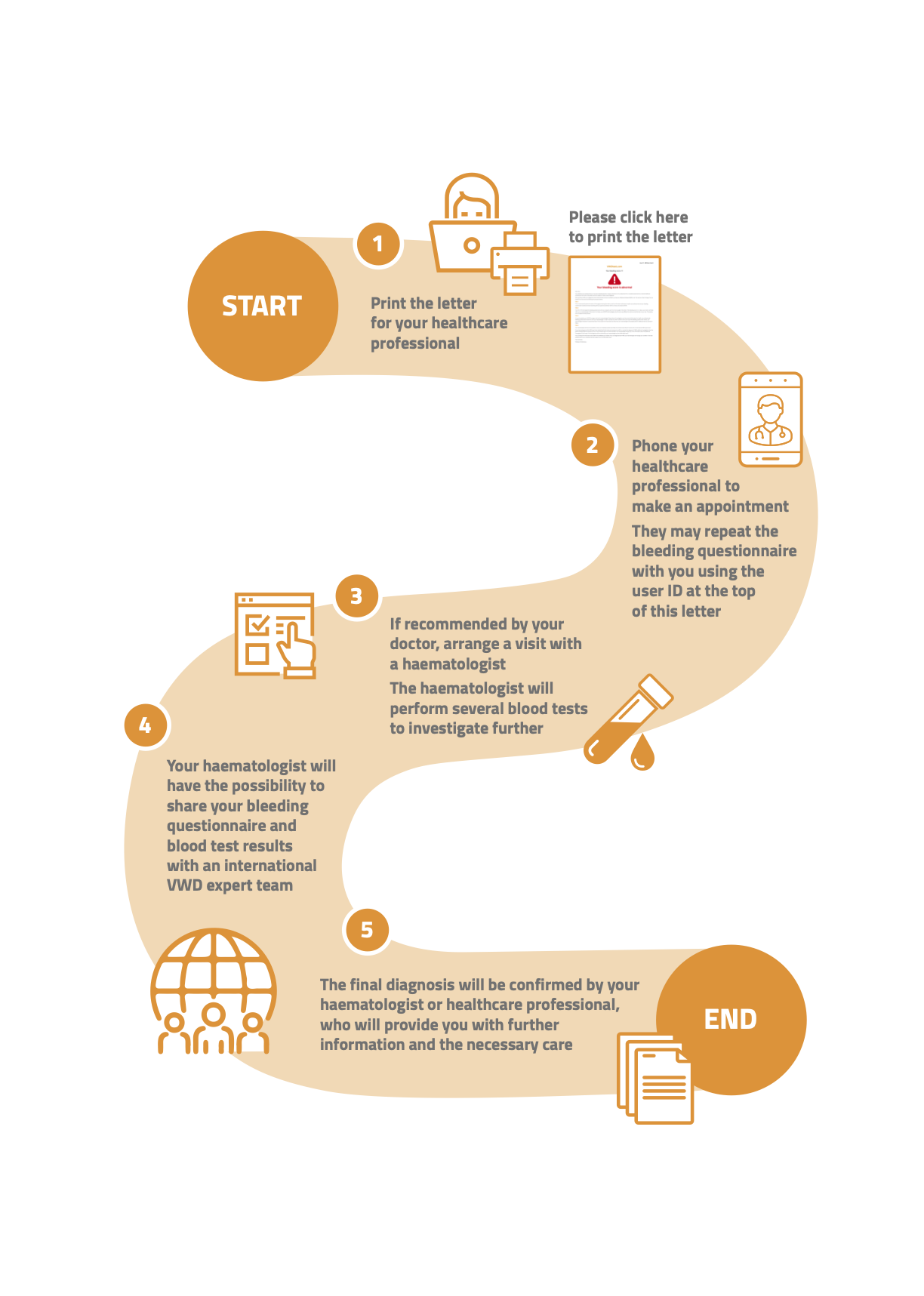
Please follow the steps below to ensure a full diagnosis.
Centers recommended for following up on the results with a von Willebrand specialist near your current location.
This letter is addressed to Health Care Professionals 999
Dear Colleagues,
My name is Erik Berntorp and I am a Professor in Haematology and Coagulation Disorders at Lund University in Sweden. As you may be aware, von Willebrand disease (VWD) is the most common bleeding disorder (affecting up to 1% of the world’s population) yet is still highly underdiagnosed. Together with other colleagues we have developed the VWDtest.com online platform, with the aim of improving the diagnosis of VWD. At the VWDtest.com website, users can complete a simple five-minute questionnaire to evaluate whether they may have a bleeding disorder or not.
In this case, the questionnaire has indicated that the user may have a bleeding disorder. We are here to help you identifying whether this person is affected by VWD. The support we provide includes advice on VWD diagnosis from world-leading experts as well as blood and plasma sample analysis in state of the art laboratories. These services are free of charge if the procedures below are strictly followed.
I hope you will benefit from the support of the VWDtest.com team and help us facilitating accurate VWD diagnosis.
How to proceed
- Following an abnormal bleeding test score, the individual has been asked to repeat the online bleeding questionnaire with their General Practitioner/Primary Care physician (GP/PCP). If this is you, please jump to the section “For GP/PCP” below.
- If the bleeding test results were similar when the test was repeated, the GP/PCP has been asked to refer the patient to a haematologist. If this is you, please jump to the section “For the haematologist” below.
For the GP/PCP
Please repeat the bleeding questionnaire together with your patient using the user ID (on the top right on the bleeding questionnaire results). Please don’t share more patient’s personal data than necessary for this purpose and please always adhere to the applicable data protection laws and regulations.
In case the bleeding score of your patient is 4 or above, please refer them to a haematologist. Please ensure that the haematologist is provided with the bleeding questionnaire results and informed about the purpose of this investigation.
In case the score is 3 or below, the patient does not need further investigation.
For the haematologist
Before contacting the VWD expert team, please execute the following blood tests:
- Complete blood count
- Activated partial thromboplastin time (APTT)
- Prothrombin time (PT)
- Fibrinogen
- Platelet function assay (PFA)
Abnormalities in the above mentioned laboratory tests, together with a clinical anamnestic patient data could give a sign for VWD. You have the possibility to contact and discuss your patient condition with our VWD expert team.
After having performed these blood tests, please contact the VWD expert team:
If you have any clinical questions about VWD, please send an email to Dr. Fernando Corrales (ffc5@med.miami.edu) if you are located in the continent of America and to Prof. Erik Berntorp (erik.berntorp@med.lu.se) if you are located anywhere else in the world stating your name, affiliation contact details and question(s). Please share the results from the bleeding questionnaire and blood tests.
Please don’t share more patient’s personal data than necessary for this purpose and please always adhere to the applicable data protection laws and regulations.
For a free sample analysis service (this service is not available in the United States) helping you to diagnose VWD, please send an email to Dr. Anna Pavlova (Anna.Pavlova@ukbonn.de) stating your name, affiliation contact details and question(s). Please share the results from the bleeding questionnaire and blood tests.
Again, please don’t share more patient’s personal data than necessary for this purpose and please always adhere to the applicable data protection laws and regulations.
Your email will be processed by the respective VWD expert, who will reply to you shortly. If you and the VWD expert team decide that further diagnostic tests are necessary, you may be asked to submit blood and plasma samples from your patient for analysis (detailed information on how to submit the samples will be provided to you). The submitted samples will undergo several tests, which may include: von Willebrand factor (VWF) antigen and activity levels, FVIII activity, VWF multimer analysis, and FVIII-binding assays. These tests will confirm or exclude whether the patient has VWD. In addition, if a VWD diagnosis is made, next-generation sequencing will be carried out to look for possible causative variations in the VWF gene.
This sample analysis service is free of charge, but only available upon explicit written request by a member of the VWD expert team. Any unsolicited sample submissions will be disregarded.
Support and advice on diagnosis and management options will continue to be available from the VWD expert team, free of charge, after the sample analysis results have been provided.
Yours sincerely,
Professor Erik Berntorp
Šī vēstule ir adresēta veselības aprūpes speciālistiem
Cienījamie kolēģi!
Mans vārds ir Ēriks Berntorps, un es esmu hematoloģijas un koagulācijas traucējumu profesors Lundas Universitātē Zviedrijā. Kā Jūs, iespējams, jau zināt, Villebranda slimība (VS) ir visizplatītākā asinsreces slimība (tā skar līdz 1 % pasaules iedzīvotāju), taču joprojām tiek diagnosticēta nepietiekami. Kopā ar citiem kolēģiem esam izstrādājuši tiešsaistes platformu vwdtest.com/lv/us, kuras mērķis ir uzlabot VS diagnostiku. Vietnē vwdtest.com/lv/us lietotāji var aizpildīt vienkāršu piecu minūšu anketu, lai novērtētu, vai viņiem varētu būt asinsreces traucējumi.
Šajā gadījumā anketa liecina, ka lietotājam var būt VS. Mēs esam šeit, lai palīdzētu Jums noteikt, vai šai personai ir VS. Mūsu sniegtais atbalsts ietver pasaules vadošo ekspertu konsultācijas par VS diagnostiku, kā arī asiņu un paraugu analīzes modernās laboratorijās dažās valstīs. Šajās valstīs pakalpojumi tiek piedāvāti bez maksas, ja tiek stingri ievērotas procedūras.
Es ceru, ka Jūs un Jūsu pacienti gūsiet labumu no vwdtest.com/lv/us komandas atbalsta un palīdzēsiet mums veicināt precīzu VS diagnostiku.
Kā jārīkojas
– Ja asiņošanas testa rezultāts ir patoloģisks, personai tiek lūgts atkārtoti aizpildīt tiešsaistes asiņošanas anketu kopā ar savu ģimenes ārstu/primārās aprūpes ārstu. Ja tas attiecas uz Jums, lūdzu, pārejiet uz sadaļu „Ģimenes ārstiem/primārās aprūpes ārstiem”.
– Ja atkārtotā asiņošanas testa rezultāti ir līdzīgi, ģimenes ārstam/primārās aprūpes ārstam pacients jānosūta pie hematologa. Ja tas attiecas uz Jums, lūdzu, pārejiet uz sadaļu “Hematologiem”.
Ģimenes ārstiem/primārās aprūpes ārstiem
Aizpildiet asiņošanas anketu atkārtoti kopā ar pacientu, izmantojot lietotāja identifikācijas numuru (asiņošanas anketas rezultātu augšējā labajā stūrī). Neizpaudiet vairāk pacienta personas datu, nekā nepieciešams šim nolūkam, un vienmēr ievērojiet piemērojamos datu aizsardzības tiesību aktus.
Ja pacienta asiņošanas rādītājs ir 4 vai augstāks, nosūtiet viņu pie hematologa. Nodrošiniet, ka hematologam tiek sniegti asiņošanas anketas rezultāti un informācija par šīs izmeklēšanas mērķi.
Hematologiem
Pirms sazināšanās ar VS ekspertu komandu veiciet šos asiņošanas testus:
Pilna asinsaina
Aktivētā parciālā tromboplastīna laiks (APTL)
Protrombīna laiks (PL)
Fibrinogēns
Trombocītu darbības tests (TDT)
Iepriekš minēto laboratorisko testu rezultātu novirzes kopā ar klīnisko anamnēzi var liecināt par VS. Jums ir iespēja sazināties ar mūsu VS ekspertu komandu un apspriest savu pacientu stāvokli.
Ja pēc šo asins analīžu veikšanas Jums ir kādi klīniski jautājumi par VS, lūdzu, rakstiet e-pastā dr. Fernando Koralesam (ffc5@med.miami.edu), ja atrodaties Amerikas kontinentā, un prof. Ērikam Berntorpam (erik.berntorp@med.lu.se), ja atrodaties jebkur citur pasaulē, norādot savu vārdu, kontaktinformāciju un jautājumu(-us). Lūdzu, dalieties ar asiņošanas anketas un asins analīžu rezultātiem.
Neizpaudiet vairāk pacienta personas datu, nekā nepieciešams šim nolūkam, un vienmēr ievērojiet piemērojamos datu aizsardzības tiesību aktus.
Dažās valstīs mēs piedāvājam bezmaksas paraugu analīzes pakalpojumu, kas palīdz diagnosticēt VS. Ja vēlaties saņemt papildu informāciju par šo pakalpojumu un noskaidrot, vai tas ir pieejams Jūsu valstī, nosūtiet e-pasta vēstuli uz VWDtest_service@octapharma.com, norādot savu vārdu, kontaktinformāciju un jautājumu(-us). Jūsu e-pasta vēstuli apstrādās vwdtest.com/lv/us komandas darbinieks, kurš drīz atbildēs uz Jūsu jautājumu.
Ja šis pakalpojums ir pieejams Jūsu valstī, dalieties ar asiņošanas anketas un asins analīžu rezultātiem, un atkārtoti lūdzam neizpaust vairāk pacienta personas datu, nekā nepieciešams šim nolūkam, un vienmēr ievērot piemērojamo datu aizsardzības tiesību aktu prasības.
Ja Jūs un VS ekspertu komanda nolemsiet, ka ir nepieciešami papildu diagnostiskie testi, iespējams, Jums tiks lūgts iesniegt pacienta asins un plazmas paraugus analīzei (Jums tiks sniegta detalizēta informācija par paraugu iesniegšanu). Iesniegtajiem paraugiem tiks veikti vairāki testi, kas var ietvert Villebranda faktora (VWF) antigēna un aktivitātes līmeņa, kā arī FVIII aktivitātes noteikšanu, VWF multimēru analīzi un FVIII saistīšanās testus. Šie testi pacientam apstiprinās vai izslēgs VS diagnozi. Turklāt, ja tiks noteikta VS diagnoze, tiks veikta nākamās paaudzes sekvencēšana, lai meklētu iespējamās cēloniskās izmaiņas VS gēnā.
Ja pakalpojums ir pieejams Jūsu valstī, tas tiks sniegts bez maksas, bet tikai pēc vwdtest.com/lv/us komandas apstiprinājuma un atbilstoši spēkā esošajām procedūrām. Paraugi, kas iesniegti bez pieprasījuma, netiks ņemti vērā.
VS ekspertu komanda turpinās bez maksas sniegt atbalstu un konsultācijas par diagnostiku un ārstēšanas iespējām.
Cieņā,
Profesors Ēriks Berntorps un
Fernando Koraless-Medina
{{assessmentId}}
{{userInformation.email}}
{{userInformation.sex}}
{{userInformation.age}}
{{userInformation.familyHistory}}
Valsts: {{userInformation.country}} - Reģions: {{userInformation.region}}
{{question.questionTitle}}
{{question.selectedAnswer.title}}
Personas datu apstrāde, ko veic Octapharma AG
Octapharma AG paraugu analīzes pakalpojuma sniegšanai un tādējādi vienīgi paraugu nosūtīšanas koordinēšanai tiks nodoti šādi personas dati: parauga analīzes pakalpojumu pieprasījušā hematologa vārds, uzvārds, pārstāvētā iestāde un e-pasta adrese.
Tikai tad, ja to prasa likums/kodekss vai ja tas ir nepieciešams attiecīgo pakalpojumu sniegšanai, šāda informācija tiek nodota citām juridiskām personām Octapharma ietvaros.
Pārsūtīšana grupas uzņēmumiem notiek uz tāda paša juridiskā pamata kā apstrāde kā tāda. Lai nodrošinātu personas datu aizsardzību, Octapharma ir noslēgusi starpuzņēmumu datu kopīgošanas līgumu ar saviem saistītajiem uzņēmumiem.
Turklāt Octapharma var piesaistīt pakalpojumu sniedzējus, lai apstrādātu personas datus Octapharma vārdā. Šādi pakalpojumu sniedzēji drīkst apstrādāt personas datus tikai saskaņā ar Octapharma skaidri izteiktajām instrukcijām un nedrīkst izmantot šos datus savām vajadzībām.
Jums ir tiesības pieprasīt informāciju par personas datiem, kurus apstrādā/uzglabā Octapharma.
Jums ir tiesības pieprasīt jebkādu kļūdainu personas datu labojumus vai izmaiņas.
Fiziskām personām, kas atrodas ES/EEZ/Šveicē: Turklāt, ja datu subjektam ir kādas problēmas saistībā ar Octapharma veiktu personas datu apstrādi, datu subjektam ir tiesības iesniegt sūdzību kompetentajai datu aizsardzības iestādei.
Papildus iepriekš minētajām tiesībām datu subjektam ir tiesības iebilst pret noteiktu personas datu apstrādi, tiesības pieprasīt personas datu apstrādes ierobežošanu un tiesības uz datu pārnesamību. Tiesības uz datu pārnesamību attiecas uz tādiem personas datiem, kurus Octapharma apstrādā elektroniskā formā.
Octapharma glabās informāciju tik ilgi, cik nepieciešams, lai Octapharma varētu izpildīt juridiskās vai citas saistības vai lai Octapharma varētu izvirzīt, aizstāvēt vai īstenot juridiskas prasības. Kad personas dati vairs nebūs nepieciešami šiem mērķiem, tie tiks droši dzēsti, ņemot vērā vietējos tiesību aktos noteiktos glabāšanas termiņus. Ja jums ir jautājumi vai pieprasījumi par saviem personas datiem, lūdzu, rakstiet uz e-pasta adresi dataprivacy@octapharma.com.
Assist Prof. Nidal Karim Maroof Al-Rahal
Consultant Pediatrician in Research and Management Unit of Hemophilia & Rare Inherited Bleeding
Disorders
National Center of Hematology, Mustansiriyah University
Baghdad, Iraq
Šī vēstule ir adresēta veselības aprūpes speciālistiem
Cienījamie kolēģi!
Mans vārds ir Ēriks Berntorps, un es esmu hematoloģijas un koagulācijas traucējumu profesors Lundas Universitātē Zviedrijā. Kā Jūs, iespējams, jau zināt, Villebranda slimība (VS) ir visizplatītākā asinsreces slimība (tā skar līdz 1 % pasaules iedzīvotāju), taču joprojām tiek diagnosticēta nepietiekami. Kopā ar citiem kolēģiem esam izstrādājuši tiešsaistes platformu vwdtest.com/lv/us, kuras mērķis ir uzlabot VS diagnostiku. Vietnē vwdtest.com/lv/us lietotāji var aizpildīt vienkāršu piecu minūšu anketu, lai novērtētu, vai viņiem varētu būt asinsreces traucējumi.
Šajā gadījumā anketa liecina, ka lietotājam var būt VS. Mēs esam šeit, lai palīdzētu Jums noteikt, vai šai personai ir VS. Mūsu sniegtais atbalsts ietver pasaules vadošo ekspertu konsultācijas par VS diagnostiku, kā arī asiņu un paraugu analīzes modernās laboratorijās dažās valstīs. Šajās valstīs pakalpojumi tiek piedāvāti bez maksas, ja tiek stingri ievērotas procedūras.
Es ceru, ka Jūs un Jūsu pacienti gūsiet labumu no vwdtest.com/lv/us komandas atbalsta un palīdzēsiet mums veicināt precīzu VS diagnostiku.
Kā jārīkojas
– Ja asiņošanas testa rezultāts ir patoloģisks, personai tiek lūgts atkārtoti aizpildīt tiešsaistes asiņošanas anketu kopā ar savu ģimenes ārstu/primārās aprūpes ārstu. Ja tas attiecas uz jums, lūdzu, pārejiet uz sadaļu „Ģimenes ārstiem/primārās aprūpes ārstiem”.
– Ja atkārtotā asiņošanas testa rezultāti bija līdzīgi, ģimenes ārstam/primārās aprūpes ārstam pacients jānosūta pie hematologa. Ja tas attiecas uz jums, lūdzu, pārejiet uz sadaļu “Hematologiem”.
Ģimenes ārstiem/primārās aprūpes ārstiem
Aizpildiet asiņošanas anketu atkārtoti kopā ar pacientu, izmantojot lietotāja identifikācijas numuru (asiņošanas anketas rezultātu augšējā labajā stūrī). Neizpaudiet vairāk pacienta personas datu, nekā nepieciešams šim nolūkam, un vienmēr ievērojiet piemērojamos datu aizsardzības tiesību aktus.
Ja pacienta asiņošanas rādītājs ir 4 vai augstāks, nosūtiet viņu pie hematologa. Nodrošiniet, ka hematologam tiek sniegti asiņošanas anketas rezultāti un informācija par šīs izmeklēšanas mērķi.
Hematologiem
Pirms sazināšanās ar VS ekspertu komandu veiciet šos asiņošanas testus:
- Pilna asinsaina
- Aktivētā parciālā tromboplastīna laiks (APTL)
- Protrombīna laiks (PL)
- Fibrinogēns
- Trombocītu darbības tests (TDT)
Iepriekš minēto laboratorisko testu rezultātu novirzes kopā ar klīnisko anamnēzi var liecināt par VS. Jums ir iespēja sazināties ar mūsu VS ekspertu komandu un apspriest savu pacientu stāvokli.
Ja pēc šo asins analīžu veikšanas Jums ir kādi klīniski jautājumi par VS, lūdzu, rakstiet e-pastā dr. Fernando Koralesam (ffc5@med.miami.edu), ja atrodaties Amerikas kontinentā, un prof. Ērikam Berntorpam (erik.berntorp@med.lu.se), ja atrodaties jebkur citur pasaulē, norādot savu vārdu, kontaktinformāciju un jautājumu(-us). Lūdzu, dalieties ar asiņošanas anketas un asins analīžu rezultātiem.
Neizpaudiet vairāk pacienta personas datu, nekā nepieciešams šim nolūkam, un vienmēr ievērojiet piemērojamos datu aizsardzības tiesību aktus.
Dažās valstīs mēs piedāvājam bezmaksas paraugu analīzes pakalpojumu, kas palīdz diagnosticēt VS. Ja vēlaties saņemt papildu informāciju par šo pakalpojumu un noskaidrot, vai tas ir pieejams Jūsu valstī, nosūtiet e-pasta vēstuli uz VWDtest_service@octapharma.com, norādot savu vārdu, kontaktinformāciju un jautājumu(-us). Jūsu e-pasta vēstuli apstrādās vwdtest.com/lv/us komandas darbinieks, kurš drīz atbildēs uz Jūsu jautājumu.
Ja šis pakalpojums ir pieejams Jūsu valstī, dalieties ar asiņošanas anketas un asins analīžu rezultātiem, un atkārtoti lūdzam neizpaust vairāk pacienta personas datu, nekā nepieciešams šim nolūkam, un vienmēr ievērot piemērojamo datu aizsardzības tiesību aktu prasības.
Ja Jūs un VS ekspertu komanda nolemsiet, ka ir nepieciešami papildu diagnostiskie testi, iespējams, Jums tiks lūgts iesniegt pacienta asins un plazmas paraugus analīzei (Jums tiks sniegta detalizēta informācija par paraugu iesniegšanu). Iesniegtajiem paraugiem tiks veikti vairāki testi, kas var ietvert Villebranda faktora (VWF) antigēna un aktivitātes līmeņa, kā arī FVIII aktivitātes noteikšanu, VWF multimēru analīzi un FVIII saistīšanās testus. Šie testi pacientam apstiprinās vai izslēgs VS diagnozi. Turklāt, ja tiks noteikta VS diagnoze, tiks veikta nākamās paaudzes sekvencēšana, lai meklētu iespējamās cēloniskās izmaiņas VS gēnā.
Ja pakalpojums ir pieejams Jūsu valstī, tas tiks sniegts bez maksas, bet tikai pēc vwdtest.com/lv/us komandas apstiprinājuma un atbilstoši spēkā esošajām procedūrām. Paraugi, kas iesniegti bez pieprasījuma, netiks ņemti vērā.
VS ekspertu komanda turpinās bez maksas sniegt atbalstu un konsultācijas par diagnostiku un ārstēšanas iespējām.
Cieņā,
Profesors Ēriks Berntorps
Jūsu asiņošanas rādītājs: {{nbPointsAnswers}}

Jūsu asiņošanas rādītājs ir patoloģisks

Jūsu asiņošanas rādītājs ir normāls
{{testDate}}
{{assessmentId}}
{{userInformation.sex}}
{{userInformation.age}}
{{userInformation.familyHistory}}
Valsts: {{userInformation.country}} - Reģions: {{userInformation.region}}
{{question.questionTitle}}
{{question.selectedAnswer.title}}
Jūsu asiņošanas rādītājs:Your bleeding score: {{previousAssessmentData.score}}
Jūsu asiņošanas rādītājs ir patoloģisks
Jūsu asiņošanas rādītājs ir normāls
{{previousAssessmentDate}}
{{previousAssessmentId}}
{{previousAssessmentData.sex}}
{{previousAssessmentData.age}}
{{previousAssessmentData.family_history}}
Valsts: {{previousAssessmentData.country}} - Reģions: {{previousAssessmentData.region}}
{{answer.question_title}}
{{answer.answer_title}}
Personas datu apstrāde, ko veic Octapharma AG
Octapharma AG paraugu analīzes pakalpojuma sniegšanai un tādējādi vienīgi paraugu nosūtīšanas koordinēšanai tiks nodoti šādi personas dati: parauga analīzes pakalpojumu pieprasījušā hematologa vārds, uzvārds, pārstāvētā iestāde un e-pasta adrese.
Tikai tad, ja to prasa likums/kodekss vai ja tas ir nepieciešams attiecīgo pakalpojumu sniegšanai, šāda informācija tiek nodota citām juridiskām personām Octapharma ietvaros.
Pārsūtīšana grupas uzņēmumiem notiek uz tāda paša juridiskā pamata kā apstrāde kā tāda. Lai nodrošinātu personas datu aizsardzību, Octapharma ir noslēgusi starpuzņēmumu datu kopīgošanas līgumu ar saviem saistītajiem uzņēmumiem.
Turklāt Octapharma var piesaistīt pakalpojumu sniedzējus, lai apstrādātu personas datus Octapharma vārdā. Šādi pakalpojumu sniedzēji drīkst apstrādāt personas datus tikai saskaņā ar Octapharma skaidri izteiktajām instrukcijām un nedrīkst izmantot šos datus savām vajadzībām.
Jums ir tiesības pieprasīt informāciju par personas datiem, kurus apstrādā/uzglabā Octapharma.
Jums ir tiesības pieprasīt jebkādu kļūdainu personas datu labojumus vai izmaiņas.
Fiziskām personām, kas atrodas ES/EEZ/Šveicē: Turklāt, ja datu subjektam ir kādas problēmas saistībā ar Octapharma veiktu personas datu apstrādi, datu subjektam ir tiesības iesniegt sūdzību kompetentajai datu aizsardzības iestādei.
Papildus iepriekš minētajām tiesībām datu subjektam ir tiesības iebilst pret noteiktu personas datu apstrādi, tiesības pieprasīt personas datu apstrādes ierobežošanu un tiesības uz datu pārnesamību. Tiesības uz datu pārnesamību attiecas uz tādiem personas datiem, kurus Octapharma apstrādā elektroniskā formā.
Octapharma glabās informāciju tik ilgi, cik nepieciešams, lai Octapharma varētu izpildīt juridiskās vai citas saistības vai lai Octapharma varētu izvirzīt, aizstāvēt vai īstenot juridiskas prasības. Kad personas dati vairs nebūs nepieciešami šiem mērķiem, tie tiks droši dzēsti, ņemot vērā vietējos tiesību aktos noteiktos glabāšanas termiņus. Ja jums ir jautājumi vai pieprasījumi par saviem personas datiem, lūdzu, rakstiet uz e-pasta adresi dataprivacy@octapharma.com.
Assist Prof. Nidal Karim Maroof Al-Rahal
Consultant Pediatrician in Research and Management Unit of Hemophilia & Rare Inherited Bleeding
Disorders
National Center of Hematology, Mustansiriyah University
Baghdad, Iraq